
July 17, 2026
How to Choose Between Foreign-Language Commentary and Local Broadcasts Based on Your Understanding of the Sport
Understanding Your Current Knowledge of the Sport
Choosing between a foreign-language commentary feed and a local broadcast is not really about which language is “better.” The better option is the one that gives you the right amount of information for the way you watch sports.
If you still rely on commentators to explain rules, referee decisions, or tactical changes, a local-language broadcast will usually provide a smoother viewing experience. If you already understand the flow of the game and mainly want different perspectives, regional insight, or language immersion, a foreign-language feed can become equally enjoyable.
Start by Measuring How Much You Depend on the Commentary
Before comparing broadcasters, determine how much information you actually need from the commentators.
One of the easiest ways to judge your readiness is to watch several minutes with unfamiliar commentary or reduced volume. If you can still recognize referee decisions, tactical changes, substitutions and the purpose of replay sequences, you probably understand the sport well enough to enjoy another commentary language.
If you frequently rely on commentary to understand important decisions, stay with local coverage. Otherwise, trying a foreign-language feed is unlikely to reduce your understanding of the match.
The table below can help you decide where to start.
| Your situation | Recommended choice | Why |
|---|---|---|
| Watching the sport for the first time | Local broadcast | Easier to understand rules and terminology |
| You understand the rules but not the competition | Local broadcast | Explains tournament format, standings and context |
| You regularly watch this league | Foreign commentary can work well | You already understand the flow of play |
| You mainly enjoy tactical analysis or different perspectives | Try both broadcasts | Compare which team provides more useful insights |
| You are learning another language but already know the sport | Foreign commentary | Familiar situations make repeated vocabulary easier to recognize |
The objective is not to prove that you are an advanced fan. It is to choose the broadcast that lets you spend more time enjoying the match and less time trying to understand what just happened.

Compare the Broadcast Experience Instead of Comparing Languages
Once you know how much guidance you need, the next step is to compare what each broadcaster actually offers.
Many people assume that local broadcasts always explain more while foreign commentators always provide deeper tactical analysis. In reality, neither assumption is consistently true. Commentary style depends on the broadcaster, production team, target audience, and individual commentators rather than the language itself.
First, consider the depth of analysis. If you already understand the basics of the sport, a broadcaster that explains tactical adjustments, coaching decisions, and player roles may add more value than one that simply describes the visible action.
Second, examine the production itself. Clear score graphics, replay packages, player identifiers, possession statistics, shot maps, or officiating graphics often reduce your dependence on spoken commentary. A well-produced broadcast can remain easy to follow even when you do not understand every sentence.
Third, think about regional expertise. A broadcaster that covers a league throughout the season may provide useful background on injuries, academy players, managerial changes, or local rivalries that international feeds mention only briefly. If you follow a specific overseas competition regularly, this additional context can make the match more meaningful.
Finally, verify what your streaming service actually supports. Some platforms provide multiple commentary tracks or alternate audio for selected events, while others only offer a single feed. Availability varies according to broadcasting rights, subscription tier, device, region, and the specific competition, so it is worth checking the audio settings before kickoff instead of assuming every event offers multiple language options.
At this stage, you should already know whether you primarily need explanations, deeper analysis, or simply a more enjoyable atmosphere. That answer will determine which broadcast deserves your attention before the match even begins.
Match the Commentary to the Way You Are Watching
Your understanding of the sport is important, but it is not the only factor. The same viewer may prefer different commentary depending on who they are watching with, how important the event is, and what they want to gain from the experience.
A local broadcast is usually the more practical choice when you are watching with family or friends who all speak the same language. Shared commentary gives everyone the same context and makes it easier to discuss referee decisions, player changes, and important moments together. This is especially useful when some people in the group are less familiar with the sport.
Foreign-language commentary may work better when you are watching alone and already know the teams or competition well. In that situation, you do not need every detail translated. You may prefer the crowd atmosphere, rhythm, or regional perspective of the original broadcaster.
The importance of the match also changes the decision. During a routine league game, missing a short interview or tactical explanation may not matter. During a final, elimination match, or controversial officiating decision, precise understanding becomes more valuable. A local-language feed can reduce uncertainty when a single call affects the result.
However, this does not mean a local broadcast is always the best option for major events. Some viewers prefer the original regional feed because it captures the atmosphere surrounding the teams more closely. The correct choice depends on whether you value complete verbal understanding or a stronger connection to the competition’s local identity.
Language practice is another valid reason to choose a foreign feed, but only when the sport itself is already familiar. Sports commentary contains repeated phrases, predictable situations, and visual clues that can help viewers connect words with actions. Terms related to possession, fouls, substitutions, scoring attempts, and time remaining often appear throughout the match.
This method becomes less useful when both the language and the sport are unfamiliar. The viewer then has to interpret the rules, follow the action, and decode new vocabulary at the same time. Instead of improving comprehension, the experience may become tiring and reduce attention.

Recorded events are more suitable for language practice than important live matches because they allow the viewer to pause, replay, or compare the same moment using another audio feed. Live commentary is better treated as exposure to natural language than as a complete lesson.
The table below summarizes which option usually fits different situations.
| Viewing situation | Better starting option | Main reason |
|---|---|---|
| Watching a new sport | Local broadcast | Spoken explanations reduce confusion |
| Watching with people who have different knowledge levels | Local broadcast | Everyone receives the same context |
| Following a familiar overseas league | Foreign-language commentary | Regional coverage may add atmosphere and local knowledge |
| Watching a decisive match with complicated rulings | Local broadcast | Important decisions are easier to interpret accurately |
| Practicing a language through a familiar sport | Foreign-language commentary | Visual context supports repeated vocabulary |
| Watching primarily for crowd energy and emotion | Compare both feeds | Commentary style matters more than language |
| Reviewing a controversial moment after the match | Use both if available | Different explanations may clarify what happened |
This comparison should be used as a starting point rather than a fixed rule. The quality of the actual commentary team can still outweigh the general advantages of either option.
Build a Flexible Viewing Routine Instead of Choosing One Feed Permanently
Many viewers approach the decision as though they must choose one commentary language and use it for the entire season. A more practical approach is to change feeds according to what is happening before, during, and after the event.
Before the match, use the broadcast that provides the clearest context. This may include the starting lineup, recent injuries, tournament situation, qualification rules, expected formations, and reasons why the match matters. When you are unfamiliar with the competition, this information is often easier to absorb in your strongest language.
Once the game settles into a recognizable pattern, you can test the foreign-language feed. At this stage, the scoreboard, player positions, and flow of play may provide enough information to follow the action independently. You can then judge the feed based on its atmosphere, analysis, and knowledge of the teams rather than focusing only on what you cannot understand.
Do not wait until you are completely lost before switching back. Certain moments require more precise information than ordinary play. These include lengthy video reviews, unusual penalties, injury updates, rule disputes, changes to the competition format, or explanations of why a score has been disallowed.
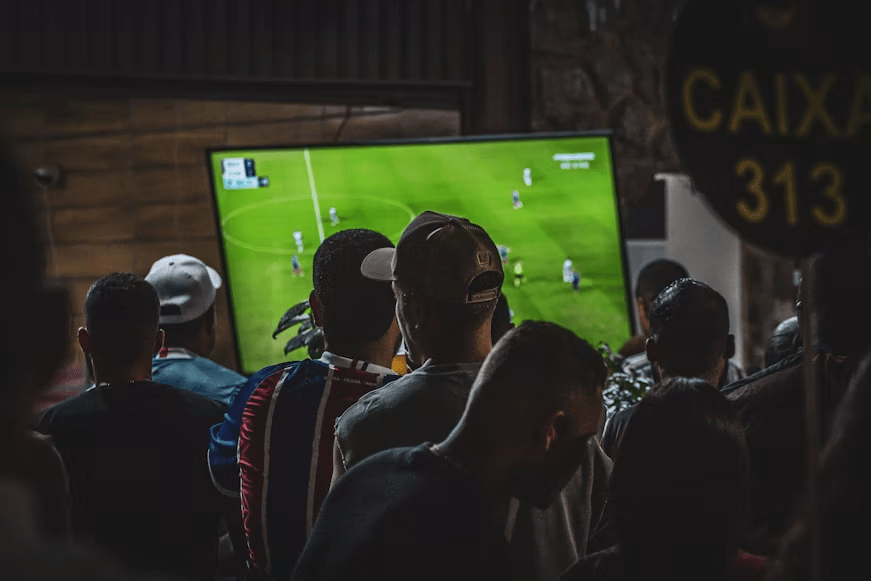
When one of these situations occurs, return to the language that gives you the clearest explanation. After the issue is resolved, you can switch again if the alternative feed remains more enjoyable.
Post-match coverage offers another opportunity to use both broadcasts. A local recap may explain the result clearly, while a regional broadcaster may provide interviews, supporter reactions, or tactical details that were not emphasized elsewhere. Comparing short post-match segments can be more useful than switching repeatedly during live play.
This approach also helps when the two broadcasts have different strengths. One may provide better pre-match analysis, while the other has more energetic live commentary. A third feed may offer clearer replay explanations or specialist analysis after the final whistle.
After several matches, keep the option that consistently helps you understand important moments while making the viewing experience more enjoyable.